Sound Healing
FREQUENCY + INTENTION = HEALING
Jonathan Goldman
What is sound vibration therapy?
Sound therapy is a vibrational therapy that uses sounds, frequencies, and vibrations to harmonize the body, mind, and emotions.
It is based on the idea that everything in the universe vibrates, and when the body is out of balance (due to stress, illness, trauma, etc.), its natural frequencies are altered.
Sound, used for therapeutic purposes, promotes the restoration of vibrational balance through specific frequencies and harmonies.
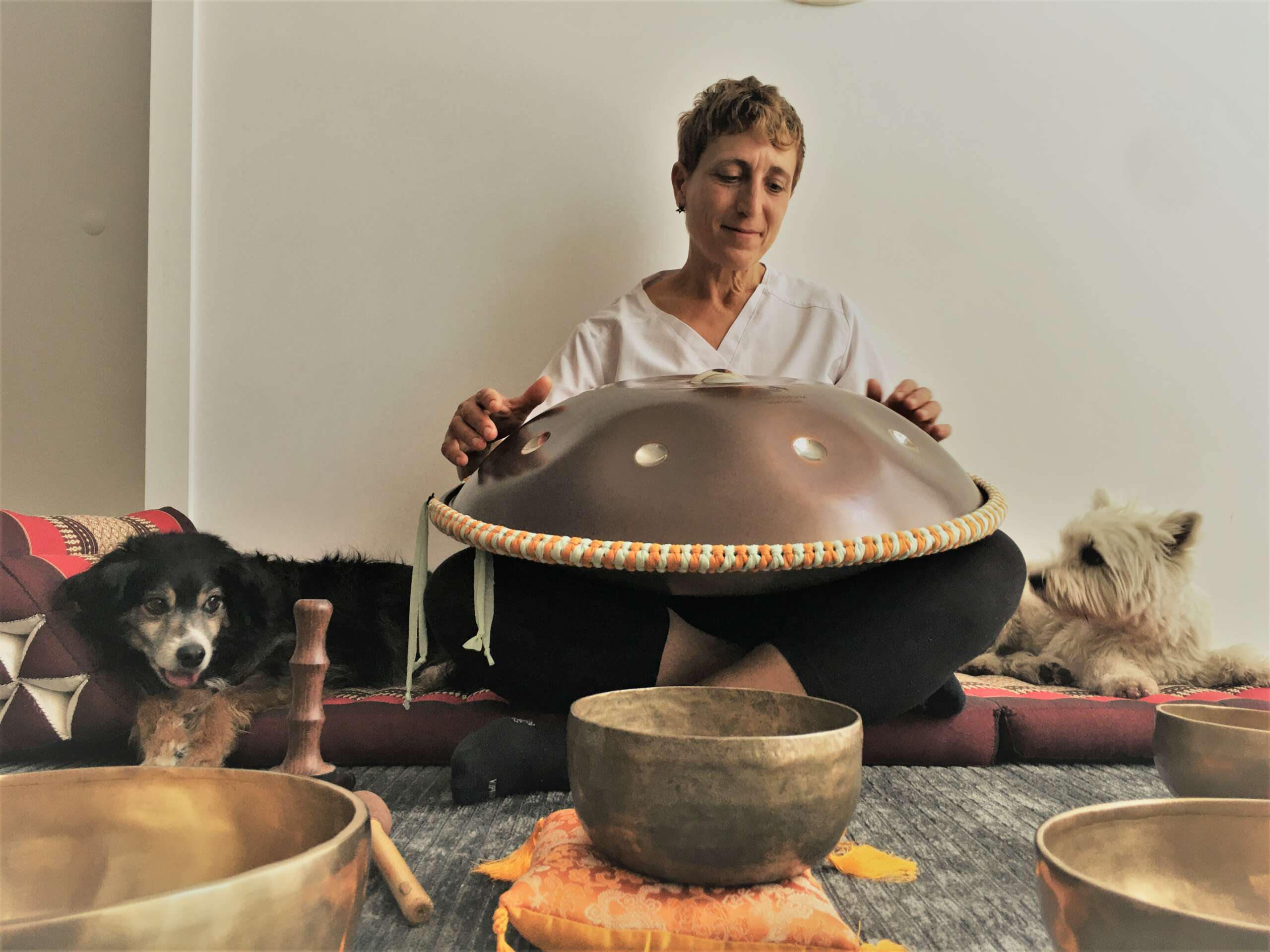
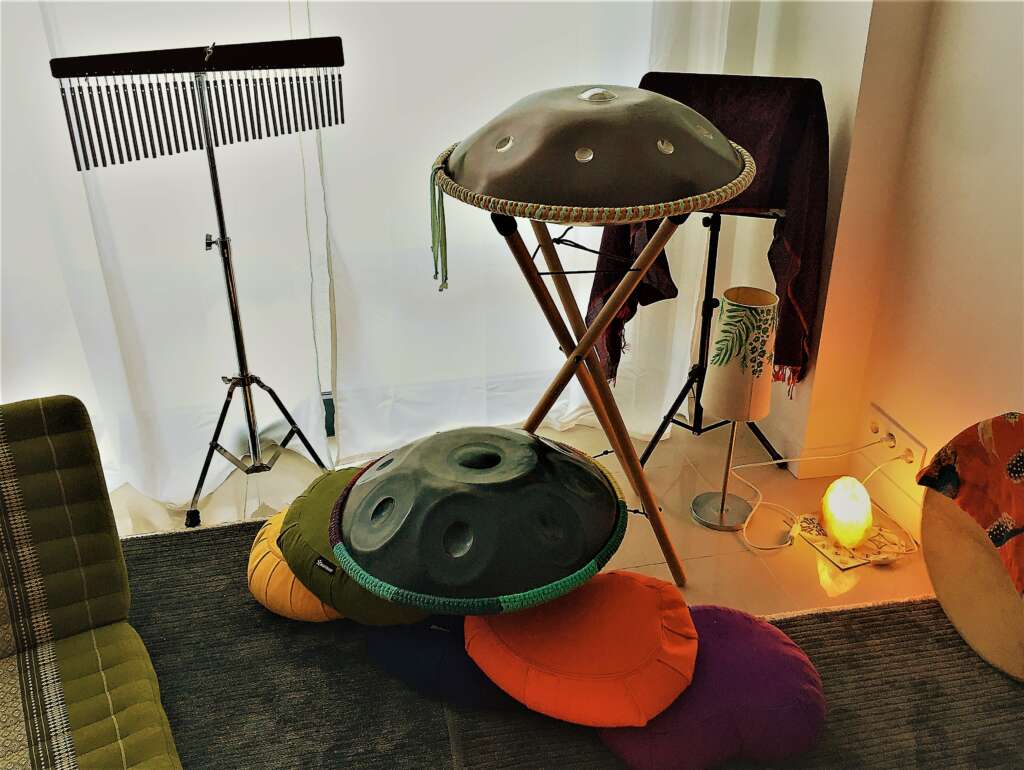
Through the use of harmonic instruments (Tibetan bells, gongs, handpans) and other instruments such as monochords, scruti-boxes, Native American flutes, and harmonic singing, sounds and vibrations are emitted that lead to a deep state of relaxation, contributing to the person’s general well-being.
Listening to the harmonious sounds, the mind returns to the present moment, merges with the sound that vibrates, propagates and then fades away.
The sound of these instruments is particularly rich in audible harmonics and allows the perception of multiple sounds at different intervals simultaneously, enveloping the listener in a sonic immersion, a regenerating bath where the conscious and unconscious spheres are deeply stimulated.


Common sound-vibrational therapy techniques
- Tibetan or quartz bells
They produce harmonious sounds and vibrations that induce deep states of relaxation and meditation. - Gong Bath
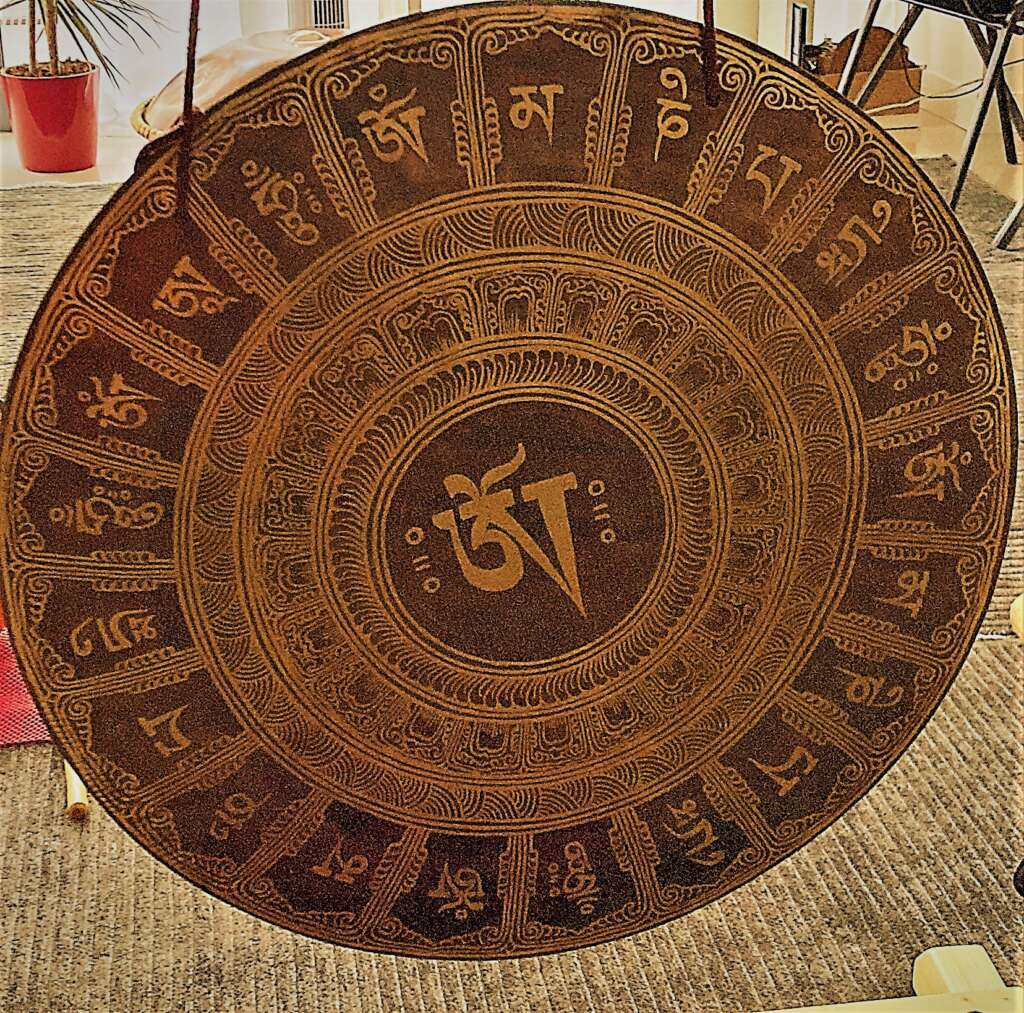
Large gongs are used that emit a variety of powerful frequencies, helping to release physical, mental and emotional tension. - Therapeutic tuning forks
Applied to specific points on the body or near the ears to influence energy flow and the nervous system. - Mantra and Harmonic Chanting
Using the voice to generate internal vibrations that harmonize the energetic body. - Ancestral or intuitive instruments
Such as shamanic drums, kalimba, rain sticks, shruti boxes, and others, used in healing, meditation, or ritual sessions. - Binaural beats or isochronic sounds
Digital audio that stimulates specific brainwaves (alpha, theta, delta, etc.), promoting relaxation, concentration, or deep sleep.
Benefits of Sound Therapy
- Reduction of stress and anxiety
- Improved sleep quality
- Stimulation of the body’s self-healing
- Increased mental clarity and concentration
- Releasing emotional blocks
- Deep state of meditation and relaxation
- Support in the processes of self-knowledge and spiritual growth
Does it have a scientific basis?
Although many sound-vibration therapy techniques are thousands of years old, modern science has begun to study how frequencies and vibrations influence the nervous system, the brain, and heart rhythm.
However, it is considered a complementary therapy, not a replacement. This means it can be used alongside medical treatments, but not as a replacement.